
The HB Five Food Groups & The Science Behind Them
The HB Five Food Groups & The Science Behind Them
Honeybrains Blog
The Honeybrains Food Groups
A simple way to understand the foods and nutrients that support long-term brain health.
Download This Blog Here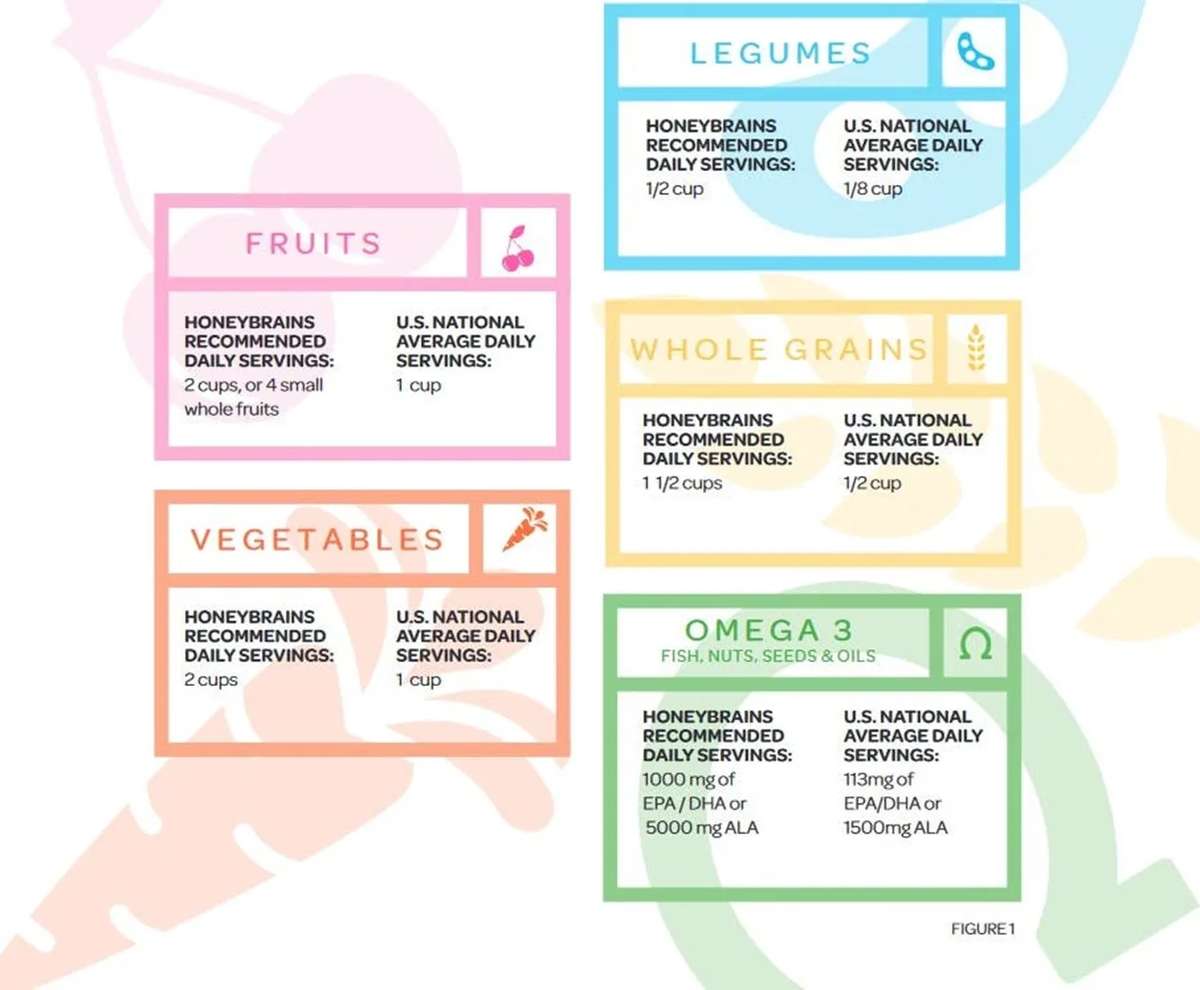
Over centuries, researchers have built a massive body of scientific knowledge around food and health. Observational studies, randomized trials, and meta-analyses all help answer different questions about how food affects the body and brain.
Observational studies can help identify relationships between health factors. Randomized trials can help show whether one factor causes another. Meta-analyses and systematic reviews look across many studies on the same topic to see whether the full body of evidence points in a clear direction.
To create the Honeybrains menu, all of these types of evidence were reviewed and weighed based on study design and strength. Ancient food wisdom was also considered, especially traditional ingredient pairings found in cultures known for longevity. In "Blue Zones," for example, certain populations live much longer than average, and modern nutrition research often supports what these communities have practiced for generations.
The HB Five Food Groups
Honeybrains found that the science linking nutrition, brain health, and longevity can be simplified into five food groups:
- Legumes
- Whole grains
- Fruits
- Vegetables
- Foods high in Omega fats
Together, these form the HB Five Food Groups. Alongside them are what Honeybrains calls Good Garnishings, which include herbs, spices, fermented foods, and raw sweeteners from nature.
These foods form the foundation of the Honeybrains menu because they provide the body and brain nutrients needed each day. They can also be combined through culinary creativity to make meals that are both nourishing and enjoyable. Honeybrains believes brain-healthy living should be accessible and fun.
Why these foods matter
Most of us are not getting enough essential brain nutrients because we do not eat enough of the HB Five Food Groups each day. Essential brain nutrients cannot be made by the body, so they must come from food.
These nutrients include color pigments like lutein, carotene, and lycopene, Omega fats, soluble and insoluble fiber, vitamins such as B and D, and minerals like iron, magnesium, and potassium.
Essential brain nutrients improve the function of the body systems that nourish and protect the brain, especially the digestive, circulatory, and metabolic systems. On average, many people are currently getting only about half of the essential nutrients their bodies and brains need.
What the science says
The HB Five Food Groups and Good Garnishings are supported by science. In general, the more fruits and vegetables people eat, the better the health effect, especially when intake starts low. People who eat more fruits and whole grains often have healthier metabolisms. Whole grains also appear to be linked with longer life.
Legumes, such as beans, peas, and lentils, are often eaten with whole grains and are especially beneficial for the heart and brain because they are rich in B vitamins and fiber. Nuts, seeds, and fish are valuable largely because of their Omega fat content. Omega fats are especially important because the brain itself is rich in fat, and people with more Omega fats in their blood tend to have larger brain volume.
A good diet can also help lower inflammation in the blood, which supports better circulatory health. Good Garnishings, including herbs, spices, fermented foods, and raw sweeteners from nature, also support the brain by helping improve digestive, circulatory, and metabolic health.
Fermented foods can include aged foods like kefir, blue cheese, tofu, tempeh, vinegar, and soy sauce, along with pickled foods like kimchi, sauerkraut, and pickles.
The Honeybrains approach
In summary, according to current science on food and the brain, eating from the HB Five Food Groups, legumes, whole grains, fruits, vegetables, and foods high in Omega fats, along with Good Garnishings, can help provide the essential nutrients needed to support a long and healthy life.
This approach is consistent with dietary guidance from the National Institute on Aging and with a growing body of scientific research. At the same time, every person is different, so individualized approaches to diet and health still matter.
At Honeybrains, the goal was to keep things simple and create a menu that celebrates the facts while making healthy eating enjoyable. Future research will continue to shape menu updates over time.
Download the full guide
Want to save this article for later. Download the PDF below.
Download This Blog Here